Nepal Police refute food-poisoning claims in fake rescue probe
Investigators find widespread irregularities in helicopter rescues but say poisoning allegations remain unverified and misleading
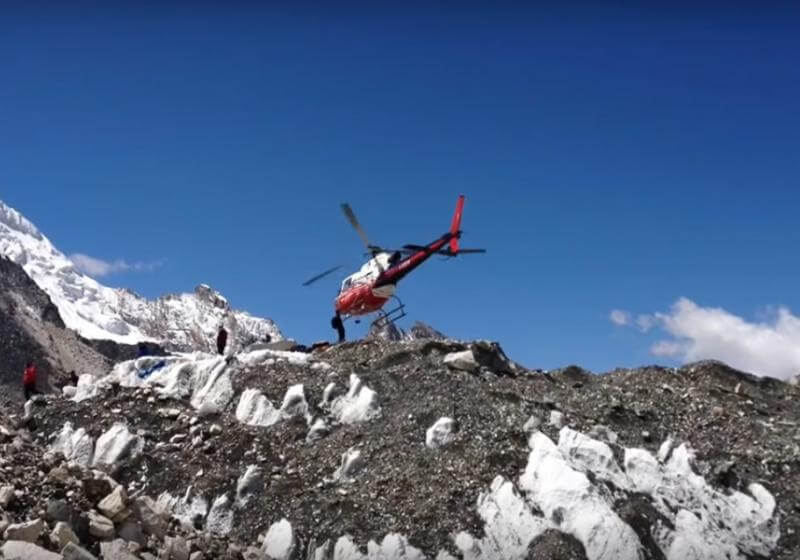
Nepal Police have refuted media reports claiming that guides in the Everest region deliberately poisoned tourists’ food to trigger fraudulent helicopter rescues.
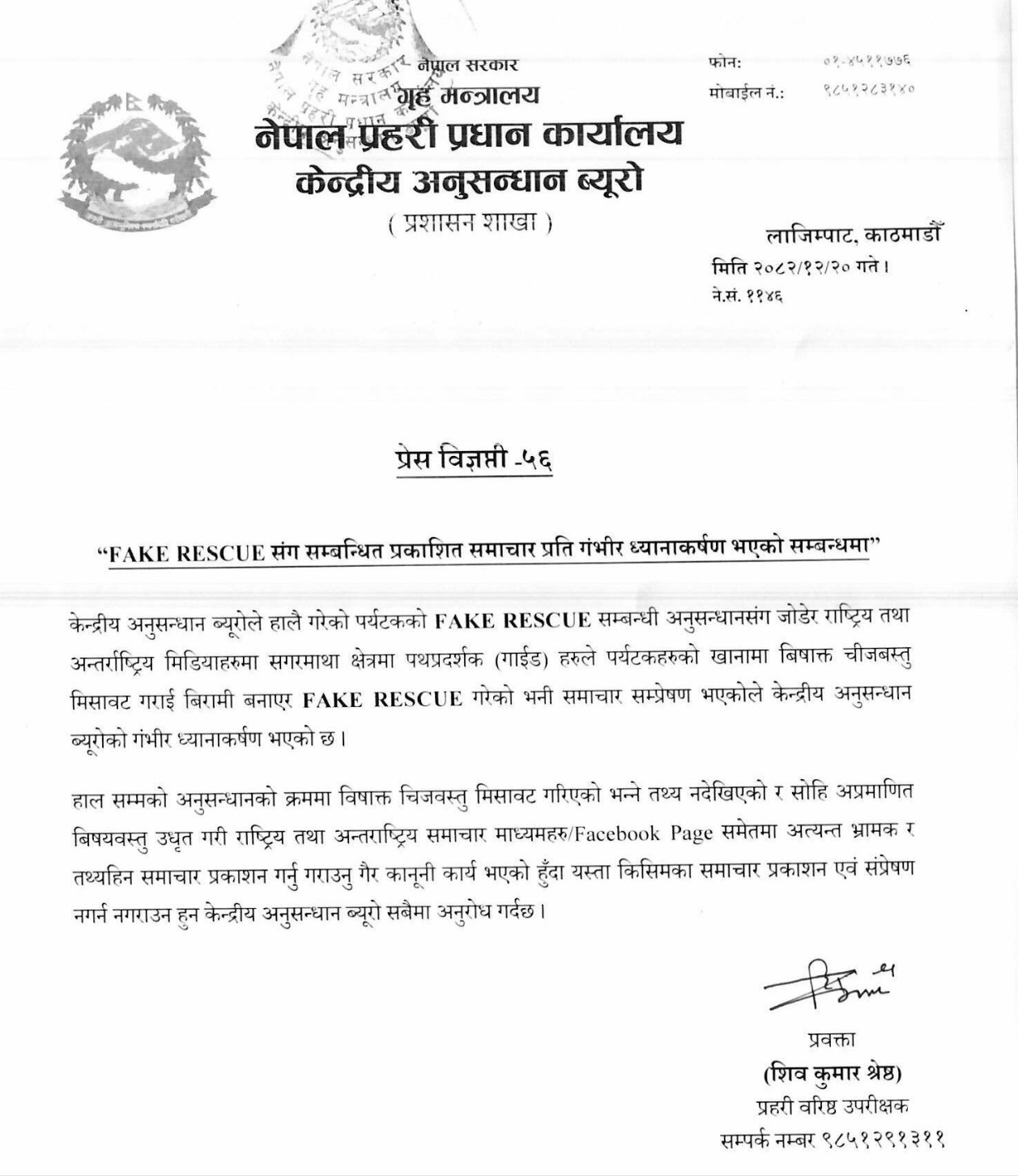
The Central Investigation Bureau (CIB), which some media outlets had cited as the source of the claim, issued a statement on Friday saying investigators have found no evidence of food adulteration so far. The bureau said it has been probing fake rescue incidents in the Everest region but described reports linking the scam to deliberate poisoning—widely circulated in the media and on social platforms—as “extremely misleading and baseless.”
The CIB urged media organizations and the public to refrain from sharing unverified content, noting that doing so violates the law.
The fake rescue scam dates to 2018, when foreign media first reported on fraudulent evacuation flights involving mountaineers and trekkers. The Ministry of Culture, Tourism and Civil Aviation later formed an investigation committee led by Joint Secretary Ghanshyam Upadhyay, which recommended action against a dozen trekking and helicopter companies, though those recommendations were never implemented.
The CIB launched a formal probe into suspicious emergency helicopter evacuations from high-altitude regions after Assistant Inspector General Manoj KC assumed leadership of the bureau. “We looked into cases between 2022 and 2025, completing the investigation within three months,” KC told Everest Chronicle.
He said the long-running scheme has damaged Nepal’s tourism reputation and allegedly defrauded international insurers millions of dollars.
Investigators identified suspicious evacuations involving multiple operators and filed cases against 33 individuals, including travel agencies, hospitals, guides, and insurance companies, as well as local insurance agents.
Authorities allege the scheme involved forged documents, misuse of permits, and billing multiple rescues for single flights.
For example, Mountain Rescue Service Pvt Ltd falsely recorded 171 rescues out of 1,248 operations and claimed more than $10 million in insurance payouts. Similarly, Nepal Charter Service Pvt Ltd was found to have staged 75 fake rescues among 471 operations, with claims totaling $8.2 million. A third company, Everest Experience and Assistance Pvt Ltd, allegedly carried out 71 suspicious rescues out of 601 cases, claiming $1.153 million.
“In some instances, a single helicopter journey was billed as multiple emergency evacuations, with a routine Kathmandu–Lukla flight—typically costing around $2,500—invoiced at up to $31,000,” KC said.
Police have charged the suspects under laws related to organized crime, crimes against national interest, document fraud, and illicit financial gain.
However, the CIB emphasized that it has found no confirmed cases of tourists being deliberately poisoned to justify evacuations.
Officials added that suspected operators include trekking companies, helicopter services, and hospitals, and that cases extend beyond the Everest region to other trekking areas, including Tilicho Lake.
The bureau cautioned against attributing the scam specifically to Everest guides or portraying poisoning as a widespread practice, stressing that no such pattern has been established.
Meanwhile, the Nepal Mountaineering Association (NMA) also raised concerns over the media reports over food poisoning and misuse of the altitude drug Diamox during Mount Everest expeditions, warning the claims could harm the country’s global reputation.
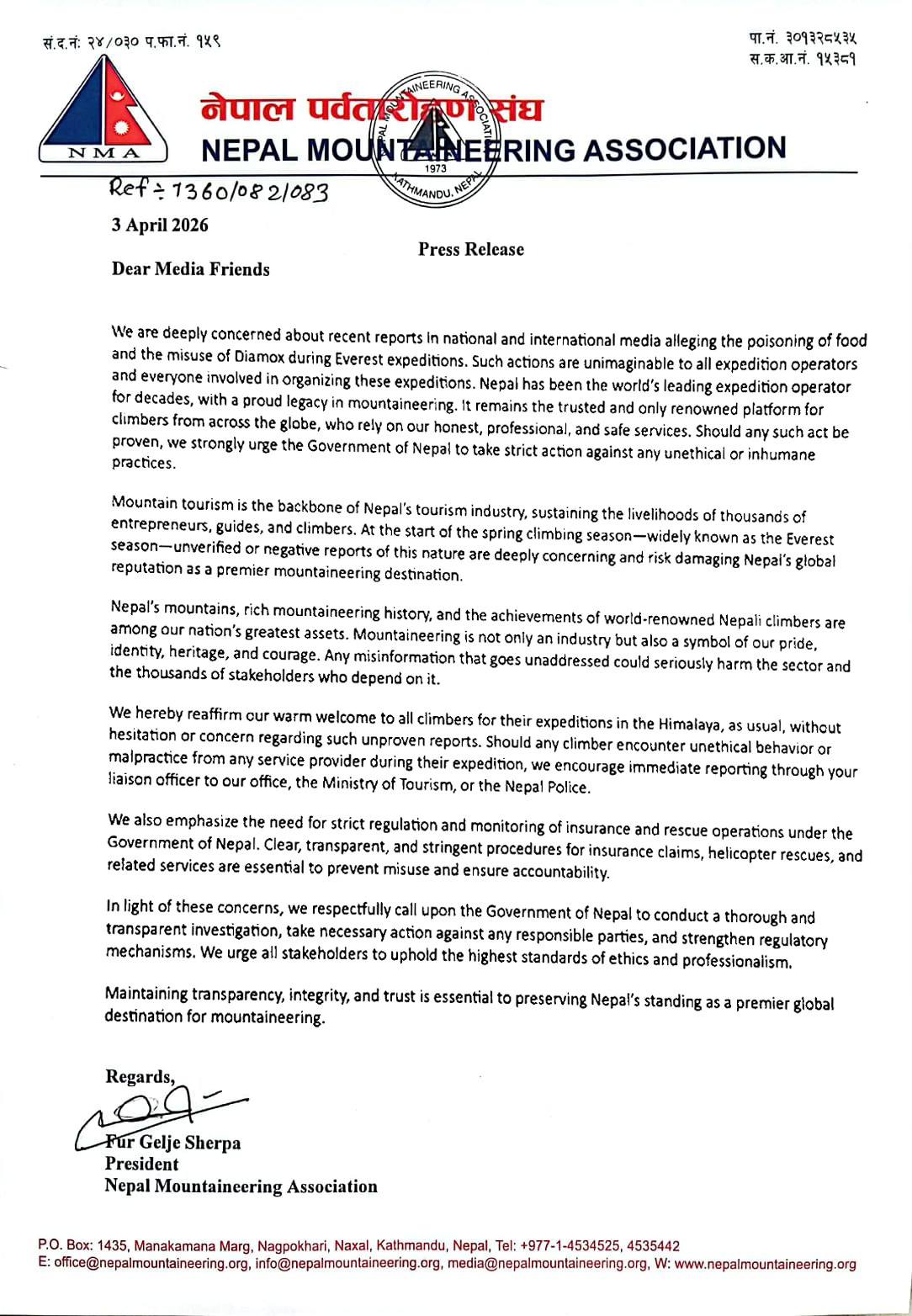
Issuing a press statement on Friday, NMA President Fur Gelje Sherpa said such actions would be “unimaginable” for expedition operators and all those involved in organizing climbs.
The Association said unverified or negative reports emerging at the start of the spring climbing season — widely known as the Everest season — risk damaging Nepal’s image as a premier mountaineering hub and could affect the livelihoods of thousands of guides, entrepreneurs and climbers.
“Mountain tourism is the backbone of Nepal’s tourism industry,” the statement said, noting that misinformation left unaddressed could seriously impact the sector and its stakeholders.
The NMA urged anyone encountering unethical behaviour or malpractice by service providers to report it through liaison officers, or directly to the association, the Ministry of Tourism or Nepal Police.
It also called on the government to strengthen regulation and monitoring of insurance and rescue operations, including ensuring clear and transparent procedures for insurance claims and helicopter evacuations.
The association urged authorities to carry out a thorough and transparent investigation into the allegations, take action against those responsible and reinforce regulatory mechanisms across the industry, while calling on stakeholders to uphold high standards of ethics and professionalism.