Nepal introduces stricter environmental controls for Everest season
The measures aim to address long-standing concerns over garbage and human waste at high-altitude camps
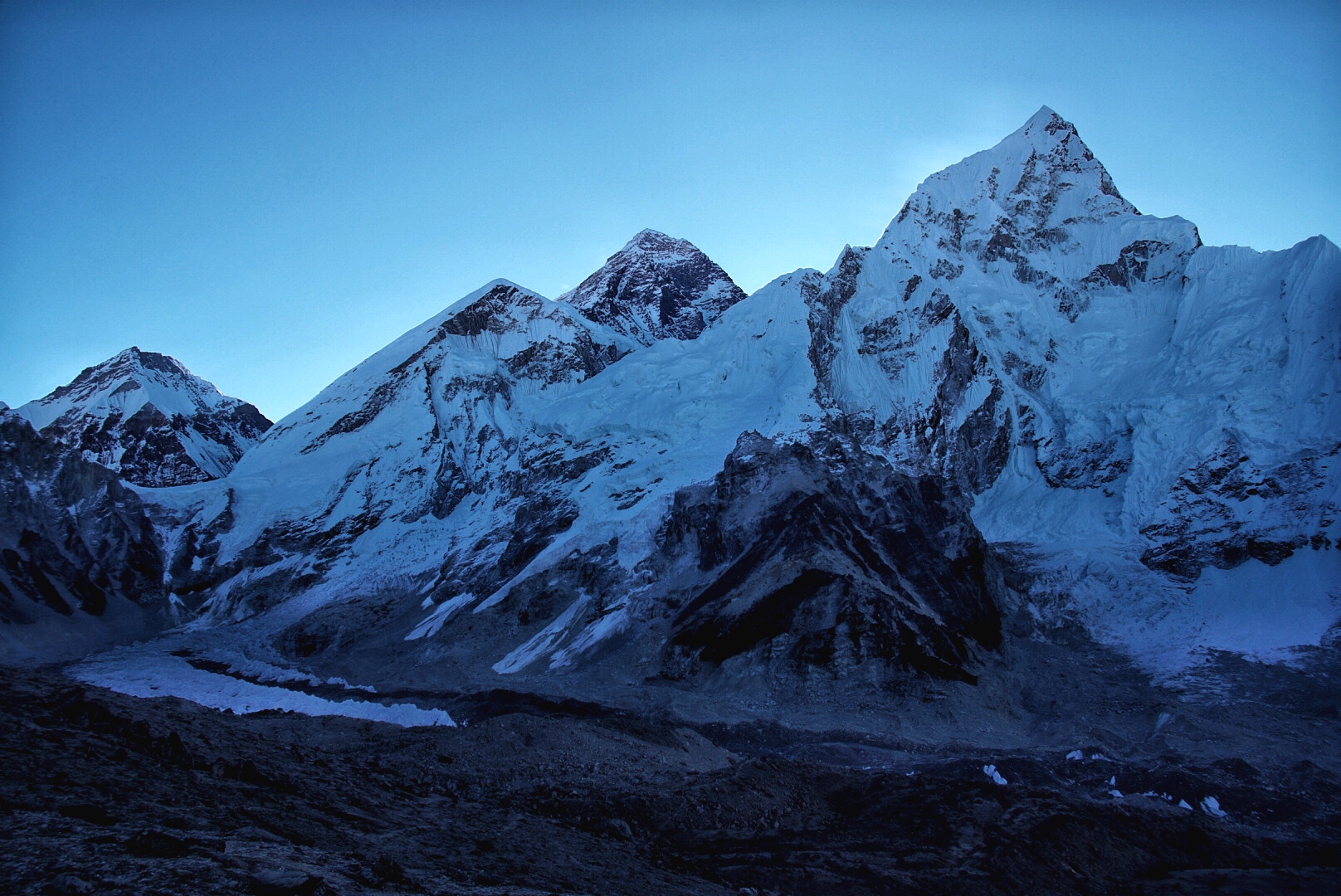
PC: Abiral Rai
The Sagarmatha Pollution Control Committee (SPCC) has imposed sweeping new regulations for the forthcoming climbing season on Mount Everest, introducing mandatory fees and significantly tougher waste management requirements to curb mounting environmental damage.
The measures, outlined in a notice signed by the Committee’s chief executive, Tshering Sherpa, apply to all expedition operators, climbers and support staff operating on Everest and neighbouring peaks Lhotse and Nuptse.
Under the new rules, all foreign climbers holding permits must pay a compulsory $600 Khumbu Icefall route fee. The charge reflects the Icefall’s status as the sole access route to the three mountains and will be levied regardless of the chosen climbing line.
Expedition companies are required to deposit the fee in advance and present proof of payment during permit registration at Namche Bazaar. Operators who fail to comply by the end of April will incur a penalty.
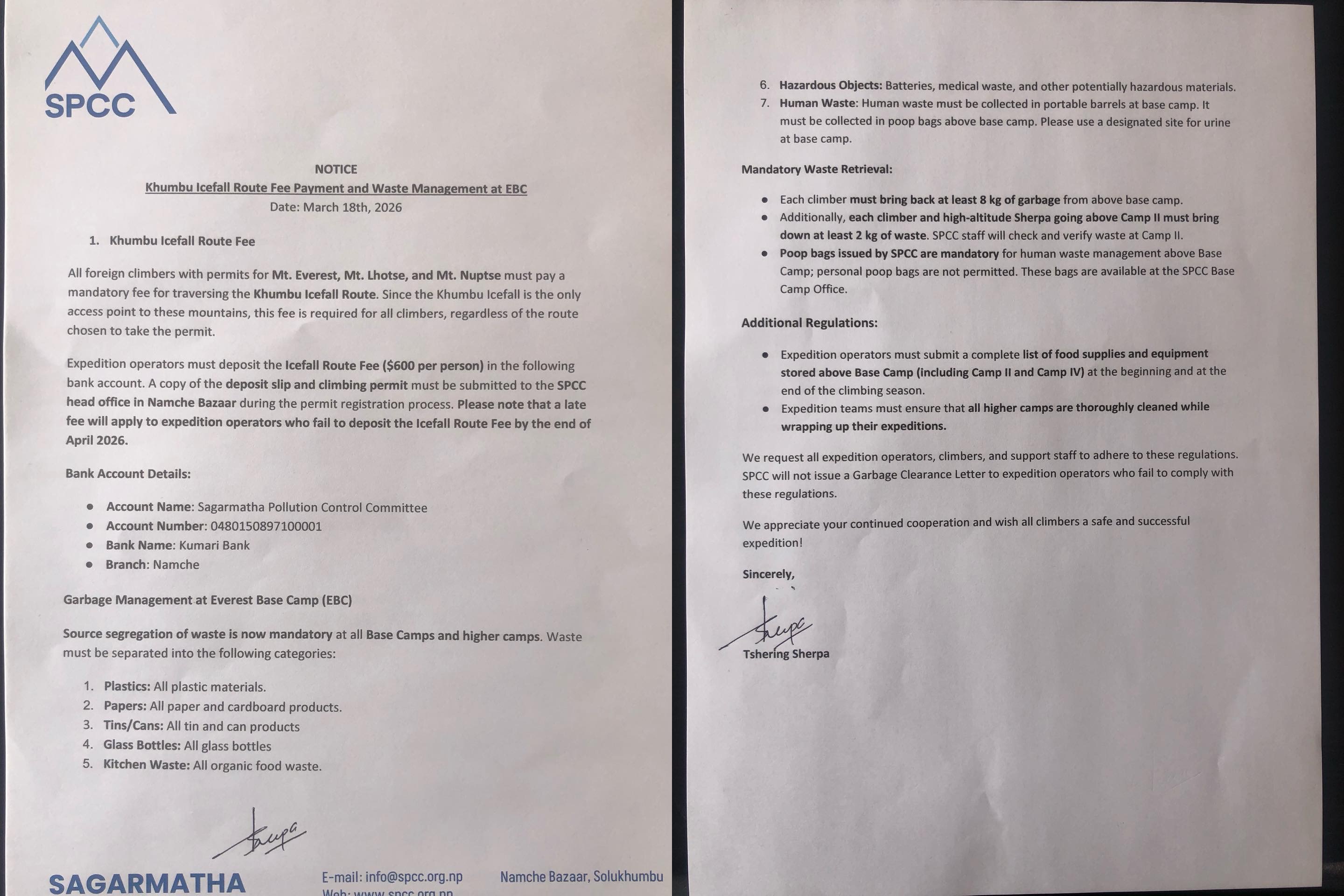
The committee has also introduced a comprehensive waste segregation system at Everest Base Camp and higher camps, requiring rubbish to be sorted into seven categories, including plastics, metals, glass, organic matter and hazardous materials.
Besides, each climber must return with at least 8kg of waste from above base camp. Those travelling beyond Camp II — including high-altitude Sherpa staff — will be required to carry down a minimum of 2kg of garbage from the higher camps.
Human waste regulations have also been strengthened. Climbers must use committee-issued disposal bags above base camp, while collection barrels will be mandatory at base camp itself. Privately sourced waste bags will not be accepted.
At the close of the season, expedition operators must submit full inventories of supplies and equipment left at higher camps and ensure all sites are cleared. The committee warned that teams failing to comply would be denied a Garbage Clearance Letter, a document required for expedition approval.
The measures mark the latest attempt by Nepali authorities to address the growing environmental strain on the world’s highest peak, where increasing numbers of climbers have led to mounting concerns over waste, pollution and the long-term sustainability of high-altitude tourism.